

- Home
- Articles & News
- Dealing with multiple streams of effluent in antimony roastery plant
Dealing with multiple streams of effluent in antimony roastery plant

As published in Modern Mining.
Having initially provided a water treatment plant to deal with various waste streams for a client producing antinomy metal, antimony trioxide and antimony-gold concentrates in the Arabian Peninsula, Multotec will this month commission an upgraded plant to deal with the change in feed and the increase in contaminants, process manager Anke Botha tells Modern Mining’s Munesu Shoko.
 Leveraging its experience in water treatment solutions for the mining industry, Multotec in 2017 designed and supplied a complete system to a mining operation that is extremely sensitive to water usage and waste production in the Arabian Peninsula. For this plant, Multotec needed to consider various waste streams.
When the plant was first constructed in 2017, explains Botha, it had various waste streams to deal with, including limestone scrubber blowdown with high levels of calcium; caustic scrubber blowdown with high levels of sodium sulphite; cooling water blowdown; acid quench blowdown with high levels of arsenic and antimony, as well as some spillages.
During the first order, Multotec did extensive test work to ensure that these various streams could be treated. Additionally, the company also did test work on its filter presses to ensure that it removed as much moisture as possible.
“The initial plant worked well, but had to be upgraded due to the change in feed and increased contaminants. As a result, the client had to resort to trucking some of the waste water to an off-site waste treatment facility that would treat the water for them. The exercise was cumbersome and costly,” she says.
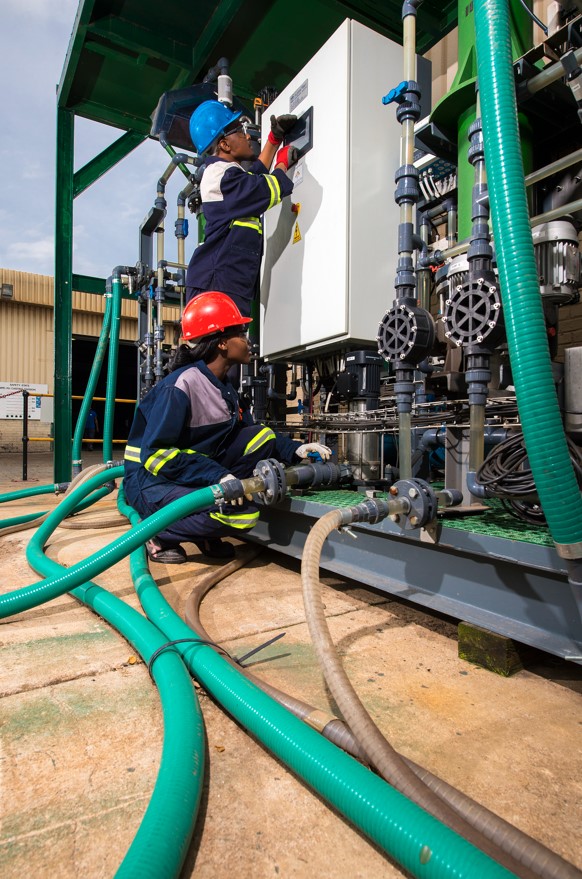 There were several changes to the client’s waste streams between 2017 and 2020, explains Botha, which necessitated for the upgrade. Firstly, it was the increase in flow from the acid quench blowdown. Secondly, there was a total increase in plant feed from 5,44 m³/hour to 10,5 m³/hour. There was also a significant increase in contaminant levels in the acid quench blowdown, with total arsenic, antimony and selenium.
The client approached Multotec for an upgrade of the plant to deal with increased contaminants in its effluent. From the onset, the upgrade project was under a lot of pressure. “Our biggest challenges were to provide the client with a new water treatment plant using old infrastructure and taking the scope without having sufficient design details due to some logistical challenges. We, however, walked the road with the client to get to a feasible solution,” explains Botha.
Initial solution
The original solution included two separate precipitators, followed by the DeSALx® Ion exchange, a unique continuous counter current ion exchange technology from Australian-based Clean TeQ Water offered locally by Multotec. This was used to remove calcium and sulphates.
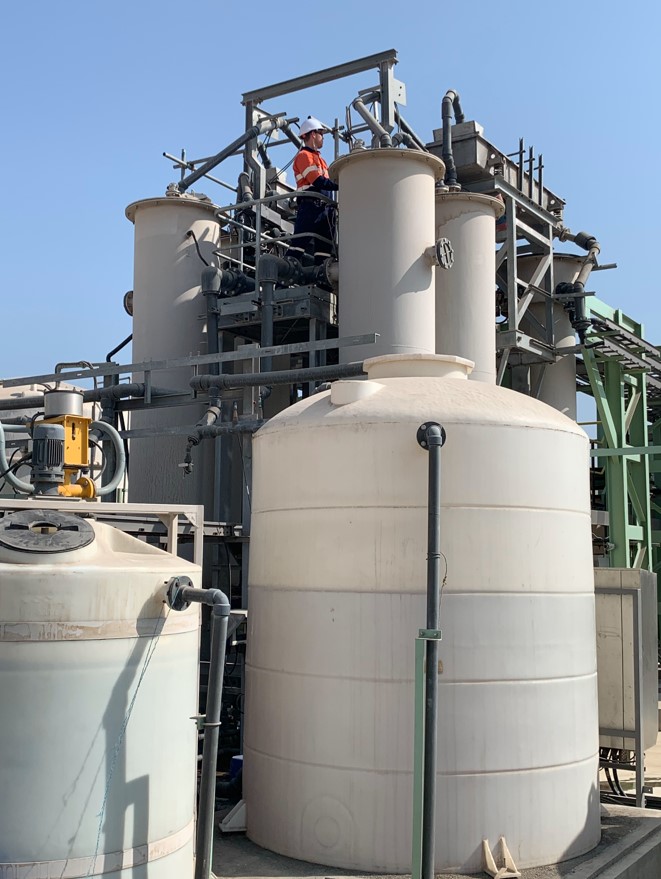 “The benefit is that the moving bed ion exchange technology overcomes a number of limitations faced by conventional fixed bed ion exchange systems. It can act as a sand filter if required, simultaneously removing suspended solids while targeting contaminant removal via ion exchange,” explains Botha.
Tolerating precipitation in the desorption column is a key feature of moving bed technology, allowing for cheaper reagents to be used and preventing blocking up. This is unique to Clean TeQ Water’s ion exchange technology and allows low-cost zero liquid discharge solutions and innovative flowsheets.
“After the calcium and sulphates were removed, the final treatment step was reverse osmosis (RO) to deliver drinkable water. RO was initially designed for sea water desalination to remove monovalent salt molecules (NaCI). Due to its success in this application, it has since been introduced to other sectors such as industrial and mining. In this plant, the system was a Zero Liquid Effluent discharge. We also supplied the filter press, producing low moisture content sludge,” she adds.
New solution
The new solution entailed finding the best possible solution by using existing equipment. This proved to be a challenge as the contaminant levels had a high increase and Multotec had to assist the client to get the most cost-effective solution.
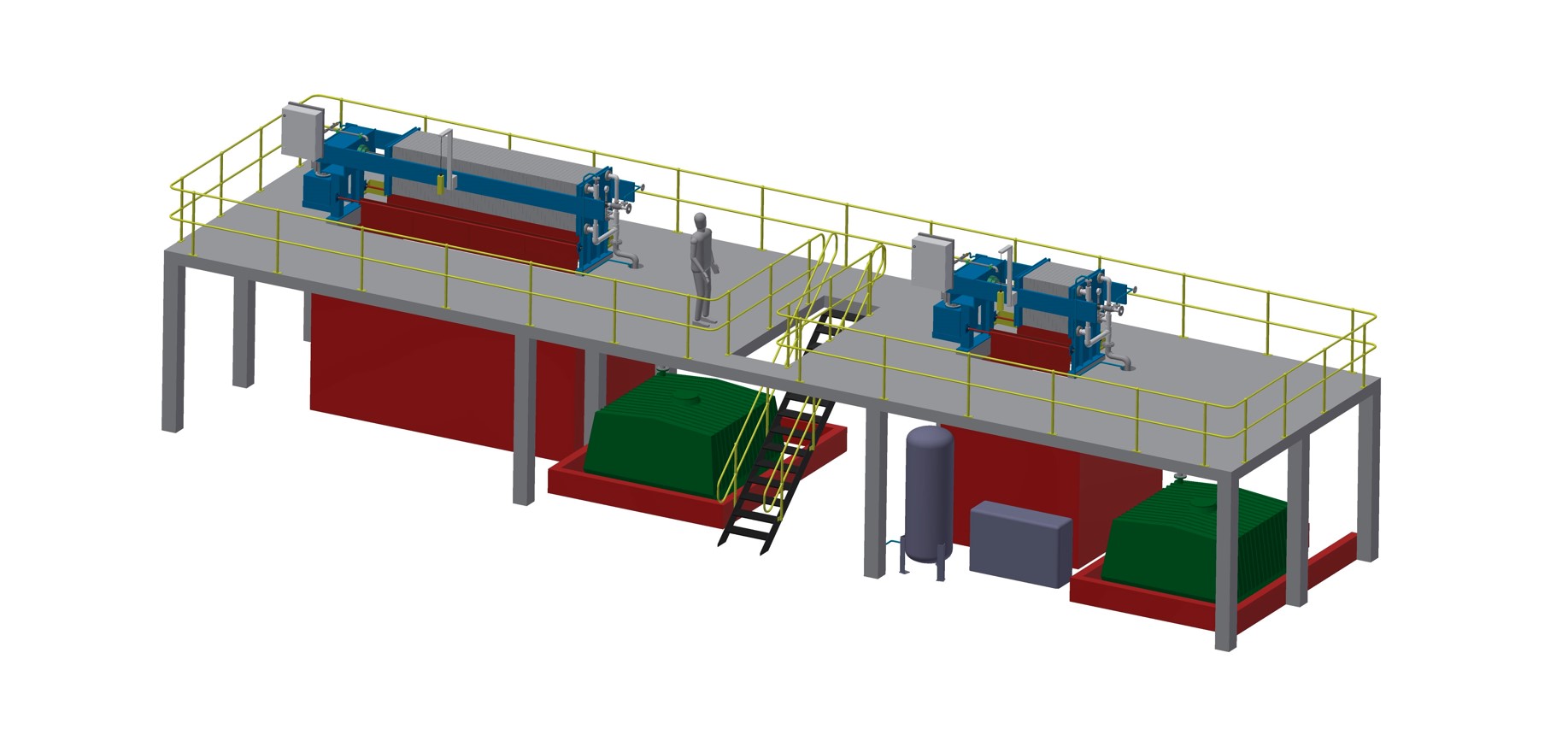
In the new plant, the limestone scrubber blow down with high calcium content, the acid quench blowdown, as well as the liquor and alkali blowdown are combined and enter a lime precipitator reactor, followed by a lime thickener and a settling tank. Here, the magnesium and calcium sulphate (from the Continuous Ionic Filtration (CIF®) effluent stream) rich sludge is removed by a Multotec filter press.
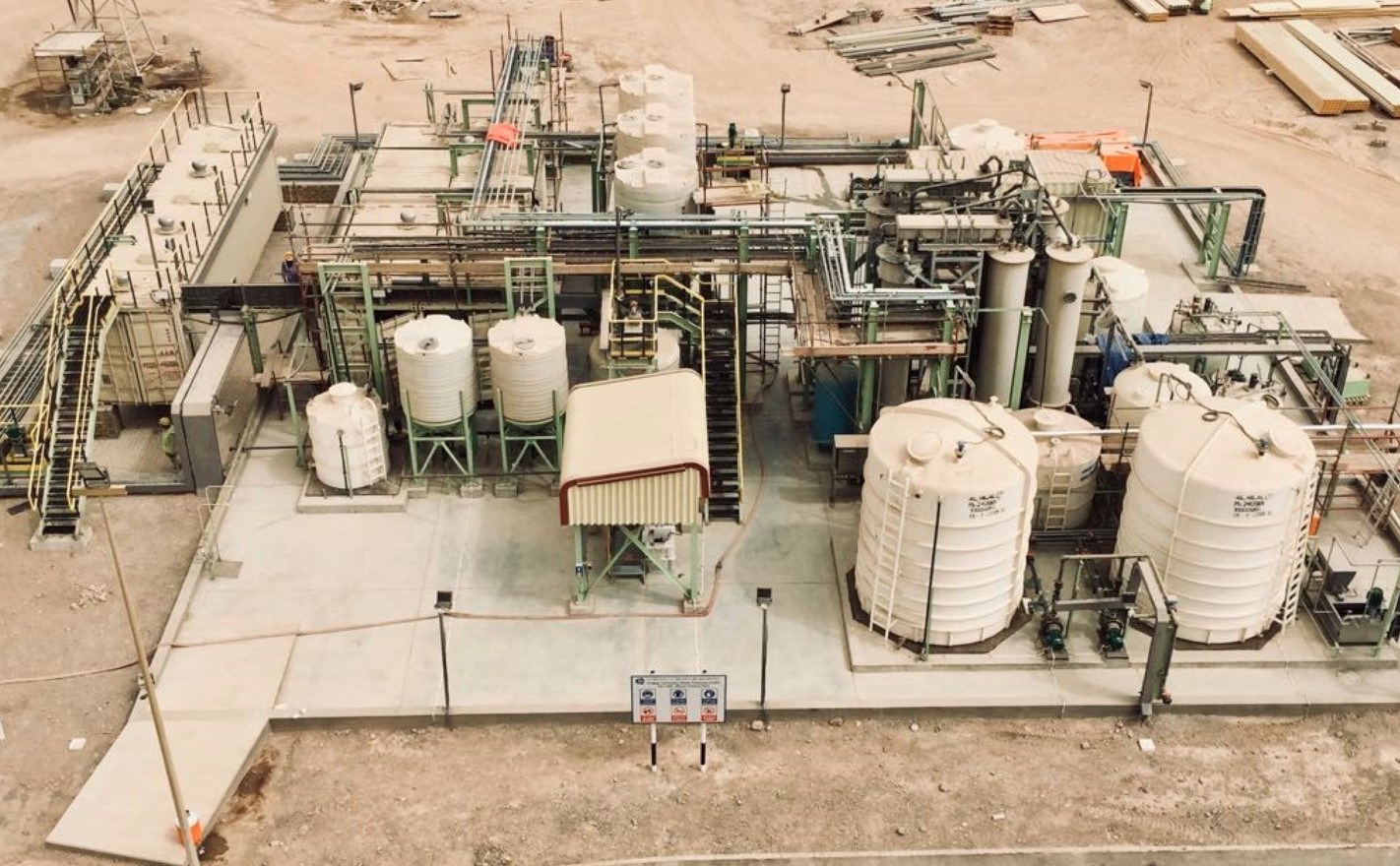 “The product water is sent to a feed buffering tank where oxidation occurs by means of hydrogen peroxide before sending it to the three-stage arsenic/antimony precipitation. The three-stage precipitation approach was selected due to the reduction of coagulant usage. The precipitation is then removed with a high-rate clarifier, sending the arsenic/antimony rich sludge to the second filter press in the plant,” explains Botha.
Due to the high sodium content in the new effluent steams, she adds, the original DeSALx® could not be used in this instance and was repurposed as a CIF®. CIF® uses a moving bed of charged resin beads to attract and remove ionic species from water while filtering the water of suspended solids, ensuring optimum efficiency and continual high performance. A portion of the resin is cycled between columns (usually hourly) using an air lift pump, allowing continuous operation and regeneration of the system.
“The CIF works similar to the DeSALx but removes only one targeted species instead of two. The target species removed here is calcium to ensure that the upcoming RO can sufficiently treat the water,” explains Botha.
The stream is then combined with the cooling water blowdown, sent through a multimedia filter and finally cleaned with RO, allowing the plant to deliver drinking quality water. The only waste produced is sludge that is further dewatered by Multotec filter presses. The water enters the system again to be cleaned.
"The new plant includes an additional precipitation stage. Originally there was only an antimony/arsenic precipitation stage, but with the change in feed and the increase in contaminants, an additional metal precipitation step was added, which called for the CIF solution,” explains Botha.
True to its operating philosophy, Multotec has given the client continued support from 2017, and will continue doing so. “We provided support to the client from the beginning, providing solutions even when design parameters were still unclear. We have been there through the whole process, meeting daily to resolve all engineering issues to get this project done as quickly as possible. We are due for commissioning this September. One of the challenges is that we might not be able to physically commission the plant. We have, however, set up an alternative remote assistance plan that will allow us to assist the client to commission virtually,” concludes Botha.