
Diamonds, Bernoulli, Newton and Savage

Multotec Wear Linings was approached by a diamond mine in the Limpopo province requesting the re-design of their scrubber feed chutes


On June 1696, Johann Bernoulli posted a mathematic problem to the readers of Acta Eruditorum which was called the brachistochrone (“shortest time” in ancient Greek). His problem statement was as follows: “Given two points A and B in a vertical plane, what is the curve traced out by a point acted on only by gravity, which starts at A and reaches B in the shortest time”. 


A similar problem was earlier attempted to be solved by Galileo in 1638 without success. Isaac Newton managed to solve the problem as well as Johann’s brother Jakob Bernoulli as this question that seems relatively simple required an advanced understanding of physics, calculus and Newton’s own minimal resistance problem. 
 

A Limpopo diamond mine used chutes from Multotec to improve production and reduce downtime.

Multotec's Johan Groenewald spearheaded a chute redesign project for a Limpopo diamond mine/

JOHAN GROENEWALD
Technical Manager, Multotec Wear Linings


"No great discovery was ever made without a bold guess. What we know is a drop, what we don't know is an ocean"

- Isaac Newton


Different solutions through various means have resulted in the same answer, a cycloid curve, which is today considered to be the optimal solution.

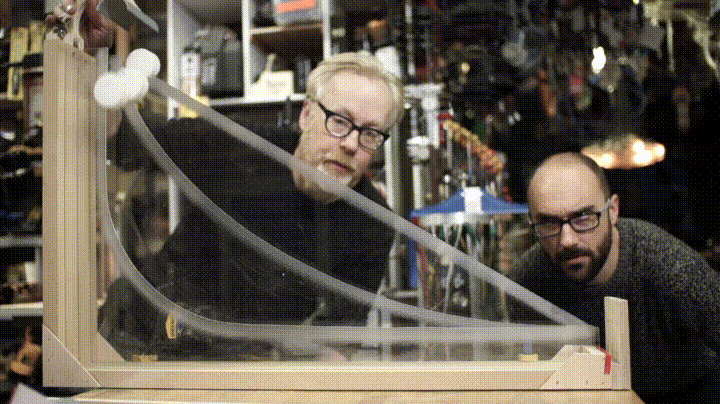
The image on the right is a physical model of the brachistochrone produced and tested by Adam Savage and Michael Stevens. The wheel rolling down the middle path, which is a cycloid curve, will always reach the bottom first. There is no faster route because this curve provides the best balance between acceleration at the beginning, reduced friction at the end and the shortest distance and thus overall produces the least amount of resistance.

Chutes from Multotec Wear Linings reduce wear and maintenance costs, allowing less down time for mining operations.The Image above indicates the original design (top) and the new design (bottom) which incorporates a cycloid curve.
Multotec Wear Linings was approached by a diamond mine in the Limpopo province requesting the re-design of their scrubber feed chutes, because the client was experiencing high levels of localised wear and must frequently replace the chute discharge nozzle which were damaged by impact due to a sudden change in material flow direction. 

The chute was re-designed based on the very curve that Isaac Newton proved to be the optimal solution. This shape allows for effectively feeding the scrubber with the least amount of wear which is spread evenly over the length of the chute. In addition to this, the high speed of material flow prevents blockages and thus also reduces down-time on the mine. The concept was applied to the diamond mine fines scrubber feed chutes with great success and is now being implemented on the coarse scrubber feed chutes as well.

Multotec Wear Linings reduced wear patterns for newly designed fines scrubber feed chutes at a Limpopo diamond mine.


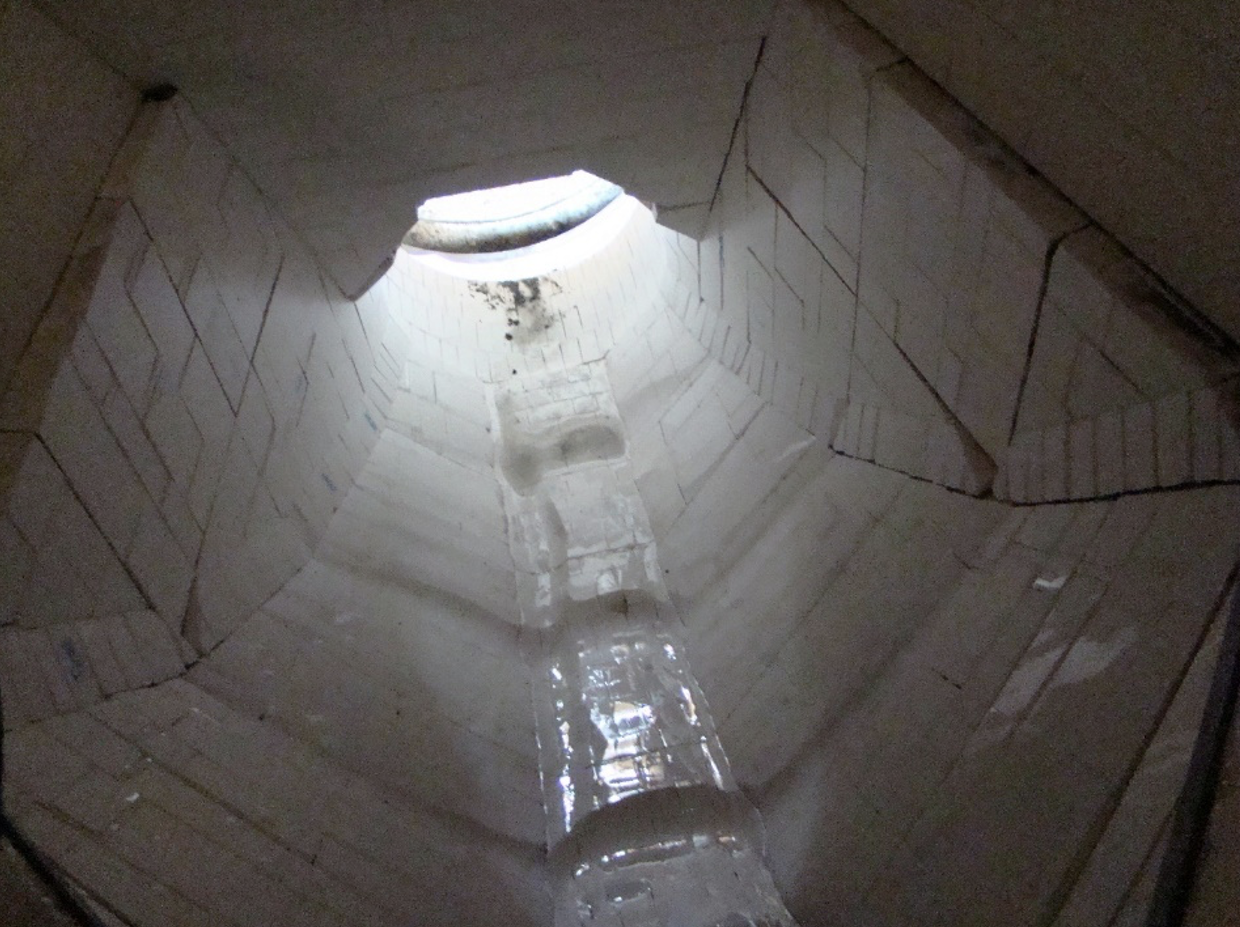
The photo on the left is the re-designed fines scrubber feed chute’s internal ceramic lining after 16 months of operation. Wear patterns are evenly spread over the length of the feed chute and the nozzle at the end had minimal wear.

Through the innovative use of this mathematical and theoretical calculation, we can increase the life span of equipment, prevent blockages and ultimately save our clients on maintenance costs and plant downtime consistently reducing their cost per ton.

https://www.instructables.com/The-Brachistochrone-Curve/ 

#InnovateForSpeed

We use cookies to improve your experience on our website. By using our site you agree to Cookies Policy