- Home
- Articles & News
- Pump it up ...
Pump it up ...
The power behind our plants
Knowledge is power — and when it comes to pumps, the more we understand them, the better we can serve our customers, colleagues, and industry. Knowing our pumps inside and out helps us answer questions with confidence, prepare accurate solutions, and stand tall behind the powerful range of slurry pumps that carry the Multotec name.
Slurry pumps are more than just machines – they are the lifeline of mineral processing plants across South Africa and beyond. From transferring abrasive slurries to handling demanding conditions, our pumps are designed with one goal in mind: keeping operations moving efficiently.
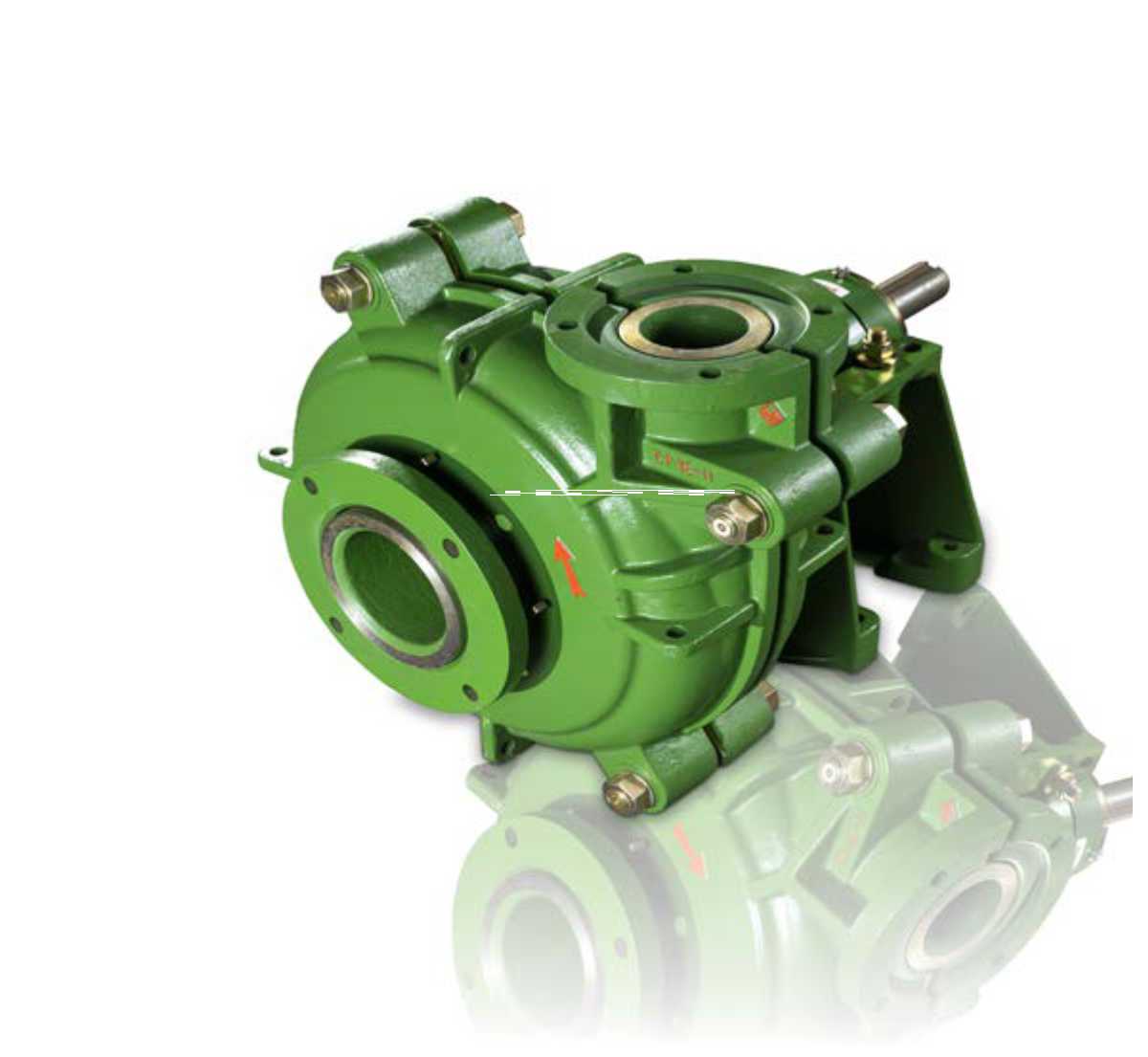 But did you know there’s often confusion about pumps – especially when it comes to what they can (and can’t) do? Let’s unpack some insights about pumps and the role they play in industry.
What we don’t do vs. what we do
Not every pump fits the challenges of slurry handling. Submersible, borehole, gear, screw and peristaltic pumps all serve a purpose in other industries, but they’re not part of the Multotec range. Instead, we specialise in pumps that are made to withstand the grit, abrasion, and high demands of mineral processing.
Our lineup includes:
HD (Heavy Duty Lined Pumps) – Built tough with metal or rubber liners, these pumps are the workhorses of slurry handling.
MD (Medium Duty Pumps) – Ideal for less aggressive duties, yet still made from high chrome iron for durability.
GR (Gravel Pumps) – With a wider casing and a 3-vane impeller, these are perfect for pumping large particles – like in DMS cyclone feeds.
HDF (Froth Pumps) – Designed for frothy slurries, with larger suction sizes and special impellers.
DW (Dewatering Pumps) – Suited for dirty water and light slurries, with heads of up to 125m.

CT (Carbon Transfer Pumps) – Protects carbon particles with a vortex design that minimises contact.
MSV/MSVR (Vertical Cantilever Pumps) – Available in metal or rubber-lined options, ideal for spillage applications.
MTV-75D – A cost-effective twin-volute vertical pump for a range of applications.
 Bigger isn’t always better
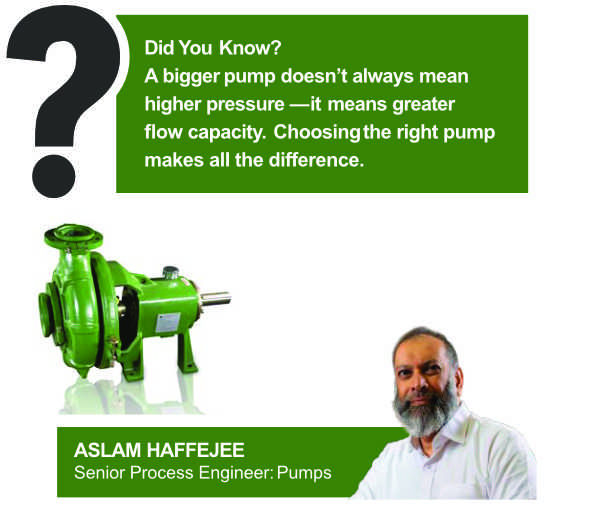
A common misconception in pumping is that a bigger pump means higher pressure (or “head”). In reality, a bigger pump means greater flow capacity, not necessarily more head. Getting this balance right is critical as undersized or oversized pumps can both cause inefficiencies and increased wear.
Pump configurations – flexibility for every plant
Multotec pumps are designed with versatility in mind. Depending on the site’s needs, pumps can be supplied:
- Bare shaft – just the pump itself, ready to be fitted with the customer’s motor and drive.
- CV or ZV - mount configurations – complete with motor, support, belt drive and guards, ready to go.
- Side-mount or vertical options – where space or layout demands different installations.
This flexibility means plants don’t need to “make do” – the pump setup can be tailored to match the application.
Built to last
What sets slurry pumps apart is their construction. High chrome iron, specialised elastomers, and even ceramic impeller options. Metal impellers come in different vane configurations – from standard 5-vanes to “chokeless” 2-vane designs that handle large particles without clogging.
Bearings, shaft seals, and liners are all engineered for one thing: longevity in tough conditions. After all, downtime in mineral processing is costly – so reliability matters.
Did You Know?
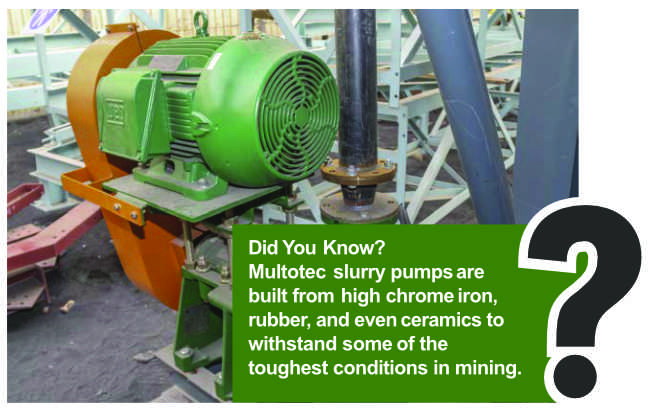
Multotec slurry pumps are built from high chrome iron, rubber, and even ceramics to withstand some of the toughest conditions in mining.
 Making selection simpler
With so many variables – flow rate, head, particle size, and material selection – choosing the right pump could feel daunting. That’s why Multotec offers digital tools like our pump selection software and interactive parts catalogue. These make it easier for engineers to find the right solution and ensure plants run at peak efficiency.
More than a pump – a solution
At the end of the day, a slurry pump is more than just hardware. It’s part of a bigger system that keeps South Africa’s mining and mineral industries moving forward. By understanding what each pump is designed for, we can ensure plants run smoothly, downtime is reduced, and value is delivered where it matters most.
At Multotec, we continue to refine our pumps to meet the evolving needs of the industry – combining engineering expertise with a deep understanding of the challenges our customers face. Because when our pumps perform, so do the operations that depend on them.