

- Home
- Articles & News
- Shift in thinking encouraging for uptake of new tech
Shift in thinking encouraging for uptake of new tech
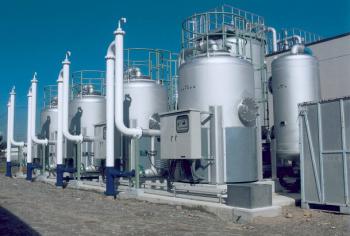 Mineral processing specialist Multotec is capitalising on the prioritisation of water recovery and treatment for mining operations by creating awareness in industry about its unconventional water-treatment methods.
Multotec’s Samplers, Solid/Liquid and Magnetic Separation division GM, Bheka Majola tells Mining Weekly that mines predominantly use sedimentation as the conventional method of recycling water. While he commends its cost-effectiveness, Majola indicates that it is not efficient, with a large percentage of water lost to evaporation and seepage.
Subsequently, “makeup” water is required to compensate for this deficit, which is sourced from municipalities or boreholes close to the mine, with mines located in water-restricted areas relying entirely on municipal water. Further, mines that use a borehole to source water rely on the strength of the borehole. Most mines rely, however, on municipalities for freshwater – albeit to varying degrees – and are, therefore, susceptible to the penalties and problems this presents.
Majola says mines located in areas with water restrictions are the most susceptible to a surcharge by municipalities for excessive water use, but clarifies that they have not yet been adversely affected, as recent rains suspended the implementation of these proposed penalties for heavy industrial users. However, he believes that, in future, the threat of enforcement of such penalties is a definite factor that will affect water use by mines.
Multotec SSM division process engineer Carien van der Walt reinforces this sentiment, noting that, as the supply of water in South Africa becomes more constrained, the cost of water will increase exponentially as municipalities try to enforce reduced water consumption.
Unconventional Technology
Van der Walt laments that water treatment by mines has been regarded as a “grudge purchase” because although they are obligated to do so, it does not impact production and costs enough to warrant prime focus.
Multotec is involved in moving away from conventional water treatment methods and this mindset. Traditionally a mining equipment supplier, the company shifted focus to water recovery and treatment following the creation of its water treatment division in 2013.
Van der Walt emphasises the incorrigibility of mine water because as it comes into contact with ores, for example, during processing, it becomes difficult to treat.
To alleviate this, Multotec is preparing the local market for continuous ionic filtration (CIF) technology, which it acquired in 2014 from its Australian-based partner Clean TeQ.
CIF enables mines to treat water on site, producing water of potable quality. Van der Walt extolls that the operating cost of treating water will be less than the cost of actually buying it from municipalities and will also produce higher levels of water recovery than those of conventional technology. “You’re essentially producing less waste in the process of actually treating this water.”
The Clean-iX technology facilitates the recovery of metals from water streams, thereby creating an additional value stream other than the low-cost water. Van der Walt enthuses that this potentially produces valuable metals that the mine can sell in addition to its standard output.
The company is pioneering the distribution of CIF in Africa by developing a market for this technology by educating the mining industry on CIF’s benefits, as well as conducting test work and compiling case studies for its application.
Majola says driving the uptake of the technology has been particularly challenging, given that water and water treatment has not been “top of mind” in the mining industry. The introduction of CIF has been negatively affected by people being wary of new products, owing to the capital costs involved in its implementation. With the technology being introduced during a period when capital investment was “few and far between” in the mining industry, further difficulties were encountered in educating customers on the product.
Further, CIF is ideal for tackling acid mine drainage (AMD), Majola points out, noting that Multotec has approached companies involved in AMD treatment to illustrate how CIF complements their work.
Van der Walt says AMD, caused by the long history of gold mining, is a “legacy” issue, especially in the Witwatersrand area. AMD is currently regulated, with treatment being mandatory by mine owners, which was not the case before.
Therefore, old, unused mines are problematic, as they contain AMD and this contaminated water can rise to the surface or overflow into interconnected mines. This is compounded by the difficulty in determining who owns these mines and, subsequently, ascribing responsibility regarding their rehabilitation with government to treat AMD. Majola states, however, that if the water can be successfully treated to a potable standard, it presents a valuable water resource.
Multotec is also actively aiming to educate the mining industry on the benefits and opportunities provided by its polishing filter, the Ishigaki Fibre-Wakishimzu (FW), licensed by the company in 2014 from its Japanese partner Ishigaki and used for clarifier in applications such as underground water seepage treatment.
Polishing Process
 Majola indicates that natural water seepage is par for the course in underground mining operations, which becomes contaminated as it comes into contact with the ore, producing water that contains suspended solids and in some cases acid mine water. Seepage is collected and cleaned in clarifiers, the overflow of which goes into what is termed clear-water dams.
He notes that this water contains suspended solids, despite being clarified, resulting in a lot of settling, even in the dam. The solids settled in the clear water dams have to be regularly cleaned out of the dam, a time-consuming and maintenance-intensive process, as this requires constant monitoring and cleaning, says Majola. Further, the pumps used in the process to pump the clear water to surface are also subject to wear, as they are sensitive to suspended solids.
The FW polishing filter circumvents this wear – decreasing the need for maintenance and associated costs – by providing an extra step to filter out and reduce suspended solids. Underground water seepage is subsequently treated underground and then clearer water is pumped to surface to be used as raw water. The filter also eliminates the constant need to clean out the clear water dams.
Majola extolls that the filter’s small, compact and light qualities allows for easy use in confined underground spaces and notes that its design and size makes it easier to maintain. Van der Walt adds that the filter’s power consumption is less than that of conventional methods.
A challenge in implementing this technology was discerning applications where suspended solids were relatively low, about less than 100 parts per million (ppm), with little variation in the suspended solids, as the polishing filter is sensitive to these factors. This was mitigated by focusing only on applications that fit these criteria.
“Multotec, leveraging its solid-liquid separation expertise, is quite excited to be in water treatment. For us to make a contribution in alleviation of the environmental impact of freshwater makeup and use, while assisting mines in reducing their operational costs in many areas, is fantastic” concludes Majola.