

- Home
- Articles & News
- Site Installation at Sibanye Thembelani Shaft – Rustenburg
Site Installation at Sibanye Thembelani Shaft – Rustenburg
Boyd Butterworth, Sales Engineer, Multotec Wear Linings, shares an account of a challenging site installation at Sibanye Thembelani shaft in Rustenburg.
Being prepared for any site installation is never easy and requires a great deal of attention to detail. Understanding the site requirements and allocating the correct resources in terms of tools, equipment and personnel is challenging. However, once on site, even the best laid plans can become meaningless when you’re faced with a curved ball. This is when you’ll quickly discover how adaptable, flexible and creative you and your team can be.
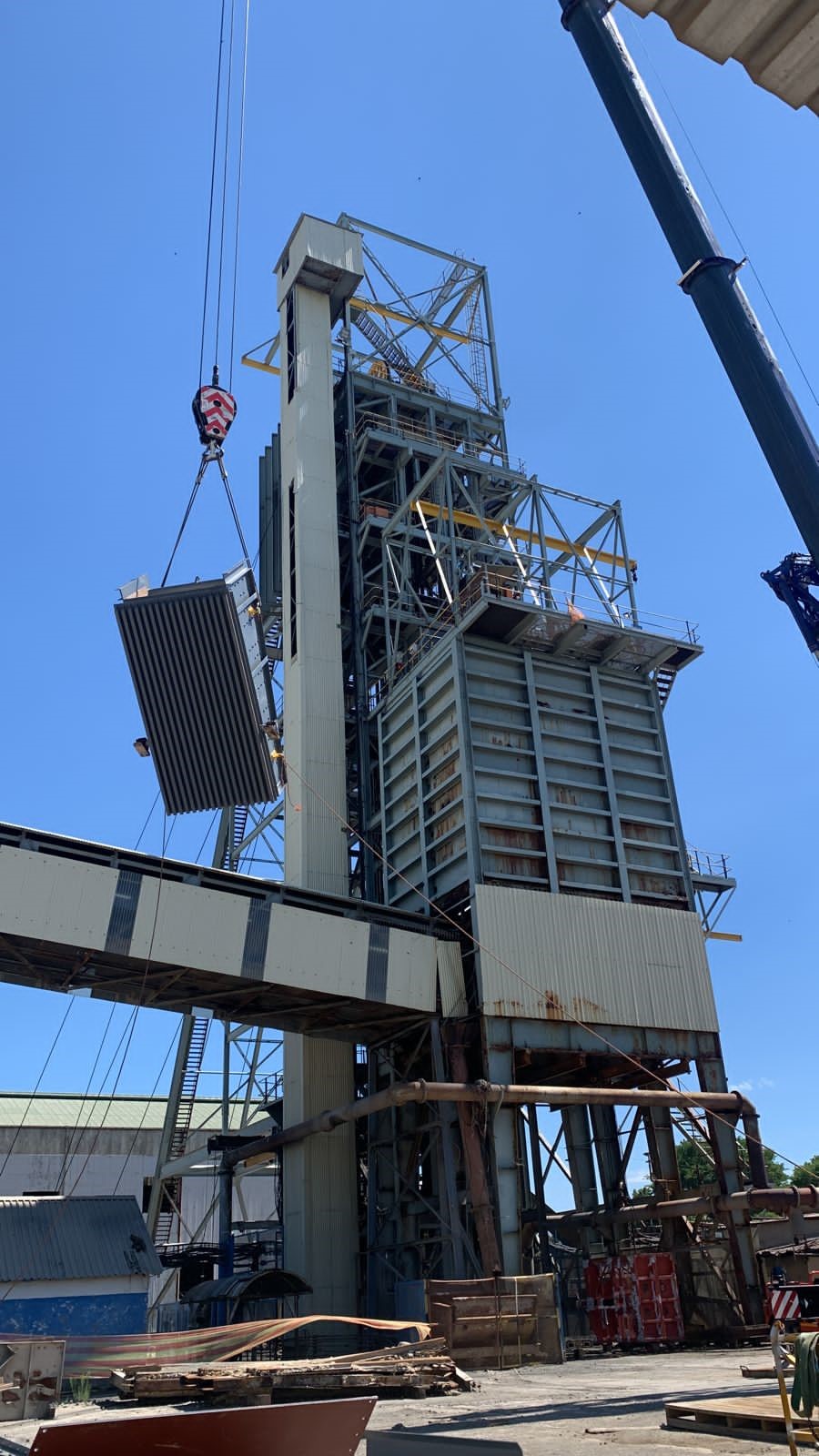
This was very much the case for the installation project at Sibanye Thembelani Shaft, where we had to install the headgear, swivel chutes and a new partition wall that we had fabricated for the client. The team was well aware that the bin and the removal of the partition wall were going to be our greatest challenge, especially since no one had seen the bin empty in over 20 years. We were prepared to replace steel and expected a few surprises, but what we discovered once the bin had been emptied was a bigger surprise than we were prepared for.
 By the time we saw the problem inside the bin, we had already struggled through a variety of challenges. A glitch in the gate system hampered our access to the site (a daily challenge for the crew). The weather presented another obstacle, and we examined the weather reports every half hour, trying to determine precisely how much time we had each day and which components we could remove or rig into place. The weather changed frequently, bringing us heat, winds and heavy rains all in the same day,which cost us nearly two full days but thankfully, we were able to accommodate this.
In addition to these challenges, the client’s team had struggled to get the bin cleaned on time. By the time cleaning had been completed and we had access to the bin, we had lost over 5 days of our planned programme. This might have been a serious concern, but we completed a number of other tasks, such as completing the chute assembly, installation of the liners, preparation of the bin wall, etc. In addition, the team was able to complete a number of essential tasks in preparation for the removal of the existing headgear and swivel chutes. Then we could get started on the critical component – the removal of the existing partition wall.
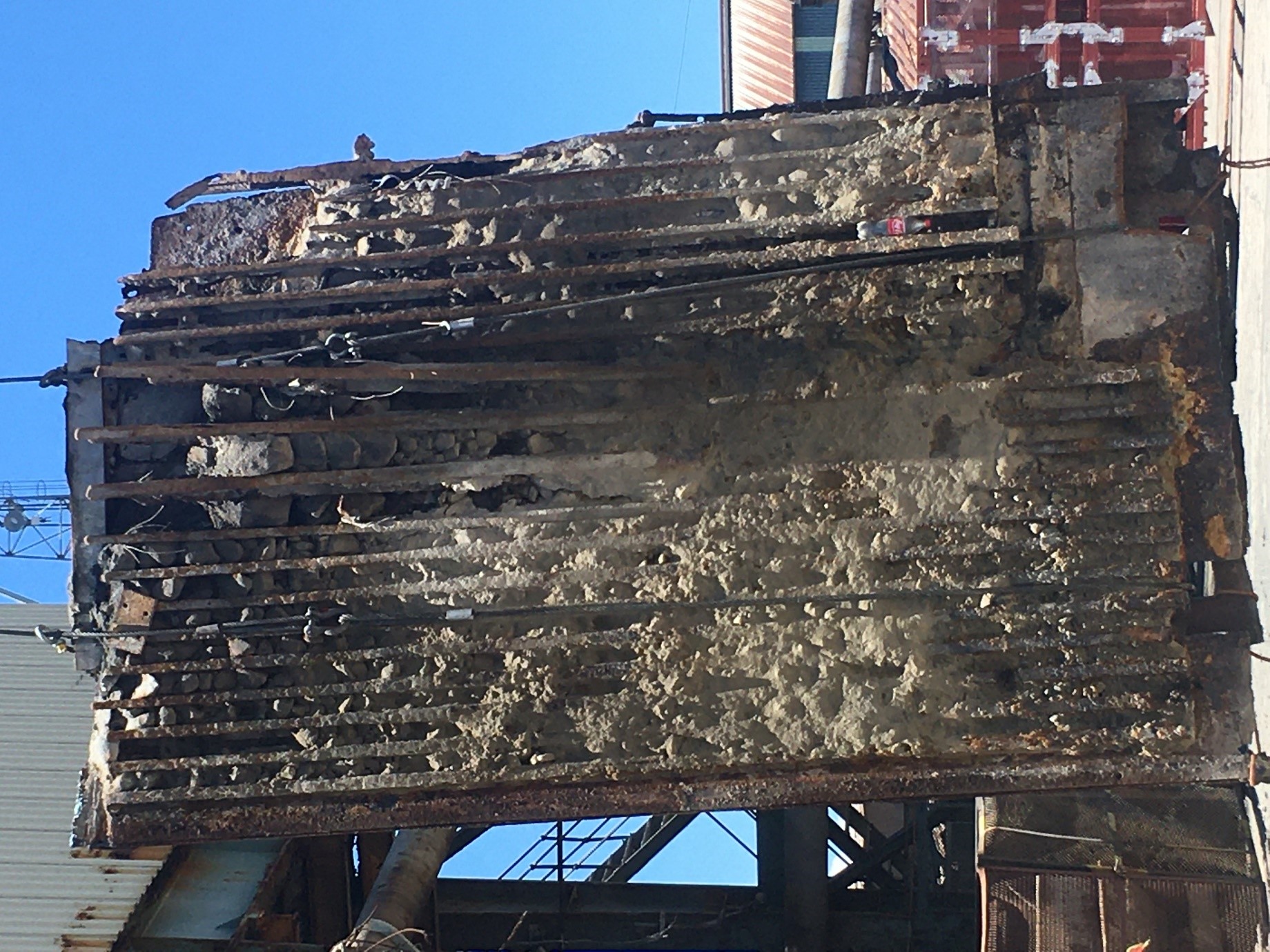
We discovered that the partition wall had been embedded in concrete and it would be impossible to remove it, including the portion embedded in the concrete, within the timeframe available to us. It was time to get creative and adapt to the site conditions!
Although this may have caused immediate stress, problem-solving of this nature is what draws many of us to this type of work. Seeking out a solution to a problem is, in fact, what the engineering environment is all about. The fact that we had very little time and very few resources available to us during that December holiday period, added to the intensity of the situation.
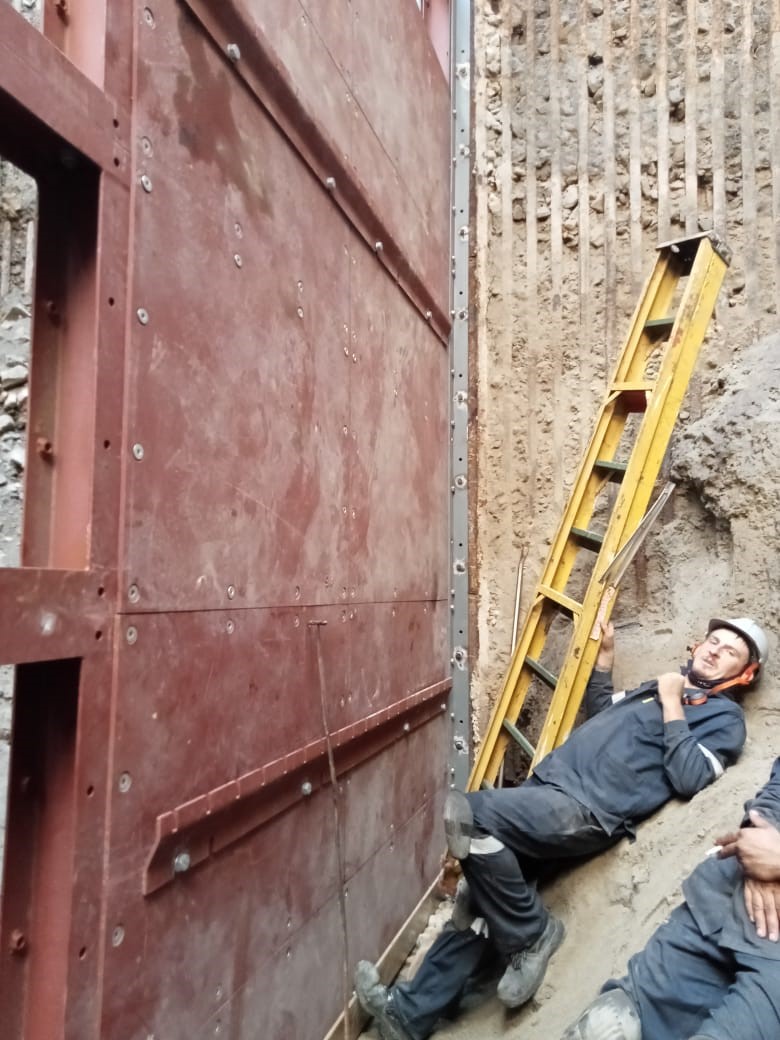
 Once it was discovered that the partition wall was embedded in concrete, the team put their heads together and devised a solution that required on-site sourcing of a number of items such as steel, additional cutting torches and then appropriate team allocation. The plan was simple: cut off the existing partition wall as far down as possible and remove all the existing rotten steel. Then prepare the base of the wall so that the protruding steel was flat and even, which would then allow us to fit into place the H-Beam that we had acquired on site. This needed to be cleaned and painted and then fastened into place.
The H-beam allowed us to position the new wall on top of it and then fasten the wall in place. This might sound rather simple, but it required a great deal of extra energy and hard work. It caused our offsite supporting team members great stress as they had to rely on the team on-site to make decisions and complete the task correctly. The final part of this plan was probably the most difficult: we had to trim the new wall on site with make-shift tools and equipment, but with great accuracy to allow the swivel chute the required clearance to function correctly.
I can happily report that we not only completed the task with the required accuracy for all the components to fit; we also managed to do this within the allocated time frame, despite the delays and lost time.
One cannot say that the job is done until the client is completely happy and in this case, we managed to succeed in exceeding the client's expectations, so much so that they requested our assistance with components for the future.
I wish to make mention of two major components that assisted in the success of this installation: the logistical and technical support of the teams on- and off-site. Any site manager will tell you that without the proper support for the team on-site, the successful completion of the task becomes extremely difficult.
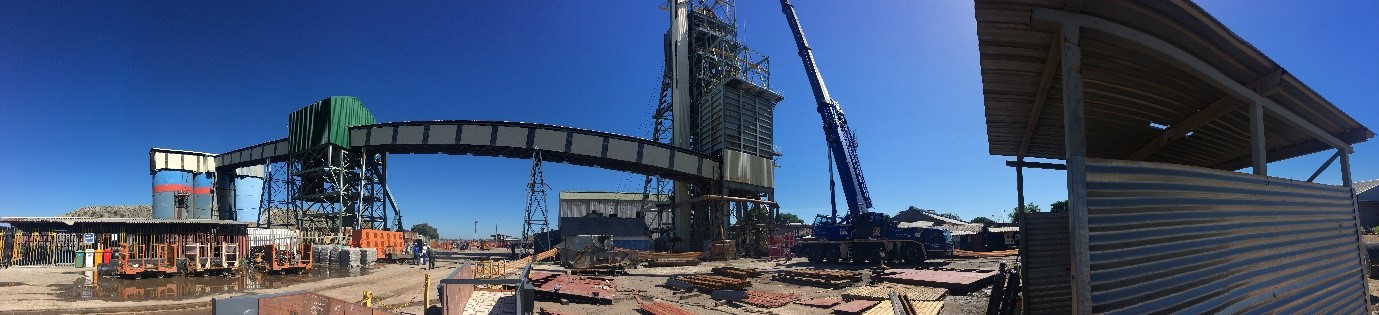
The success of the installation was a team effort, with committed input from our MD, technical team, project managers, support staff and finally, the site installation crew who performed superbly despite the challenges!
This particular installation was dependant on a team with a great deal of experience and adaptability to the working conditions experienced on-site. The adage, “you cannot buy experience”, was never truer than during this installation. I would like to thank the team of people that were involved in this project, for assisting us in keeping the Multotec brand in high regard.