

- Home
- Articles & News
- Beauty and the Beast: Mill Circuit and Cyclones Webinar
Beauty and the Beast: Mill Circuit and Cyclones Webinar
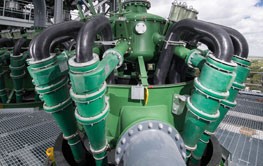

Multotec’s webinar (delivered by Product Manager: Cyclones, Frikkie Enslin) explores the typical mill circuit and highlights the role that cyclones play in the comminution circuits of minerals (including copper processing).
What is a mill circuit in mineral processing?
The mill circuit is the system that provides us with access to valuable minerals by grinding or breaking up ore and liberating those minerals.
The cyclone is an essential component of the mill circuit. It separates particles, returning oversized particles to the mill circuit (in what we call the underflow) and removing the particles that are fine enough via the overflow.
What is the difference between milling and mining?
Mining is the process of extracting ore from the earth, while milling is the physical process of breaking up the ore to expose the valuable minerals for efficient processing downstream. In copper oxide processing, for example, milling is followed by leaching.
If you’re processing copper sulphide, you’ll use flotation after the mill.
What are the primary components of a typical mill circuit?
A typical mill circuit includes: Feeders; crushers; screens; conveyors; mills with mill liners; crushers; slurry pumps; and cyclones; with concentrators; flotation cells; thickeners and dewatering screens following the milling circuit downstream.
How do you optimise a mill circuit for energy efficiency?
Don’t judge a cyclone by its size! A common misconception is that the efficiency of a small-diameter cyclone is better than a large-diameter cyclone. However, the grind produced by the milling circuit is determined by the power draw of the mill – it’s not a function of your cyclone’s cut point. And the power draw is determined or calculated using the Bond equation:

Where:
- P = Power draw per metric ton feed (kWh)
- T = Fresh feed rate (dtph)
- Wi = Ore specific work index (kWh/tonne)
- P80 = 80% passing product size [µm]
- F80 = 80% passing feed size [µm]
- Fi = Correction factors for specific scenarios
We know that mill efficiency will increase with the increase in circulating load. We also understand that in the mill, we should use just enough energy to break particles into sizes just small enough for the next process.
However, for cyclones, as the circulating load increases, separation efficiency decreases. Cyclones are used to separate particles by size, with minimum misplacement. When mill efficiency and cyclone efficiency are plotted together on a graph, we get a curved graph line which represents the circuit efficiency. By combining the mill and cyclone’s efficiency curves, we get the optimum operating range for the circuit. This circulating load is typically between 150% to 400% of the fresh feed to the mill.
Importantly, we need to use our cyclone to keep that circulating load within the optimum range (when beauty tames the beast!).
How can particle size distribution be controlled within a mill circuit?
In a typical closed milling circuit, whatever comes out of the SAG mill is pumped up to classifying cyclones. The underflow is sent back to the mill, and the overflow is sent to the next process downstream.
The parameters we’re looking at are the manipulated parameters. These can be tweaked and finetuned as required (e.g. water addition, ball mill or SAG mill speed, number of operational cyclones online, etc).
How do we determine which we need to tweak, and how far?
We look at some of our measured parameters – such as power draw, level of the feed tank, flows and density, etc. These are some of the typical parameters you can keep your eye on, and finetune.
Who are the leading manufacturers of mill circuit equipment?
For over 50 years, Multotec has helped the world’s biggest mining houses process minerals more efficiently, effectively and reliably, through the manufacture and supply of mineral processing equipment – including mill circuit equipment.
In a recent project for a client, Multotec analysed a client’s mill circuit to identify how it could be optimised to achieve a finer grind while maintaining 40% solids in the feed to flotation. By calculating the circulating load and the classification efficiency of the mill, Multotec was able to make recommendations for improvements to the client’s circuit. The simple addition of a secondary cyclone cluster and a cluster of dewatering cyclones led to an 8% improvement in the circuit’s capacity.
Closing thought
It is possible to optimise your mill circuit, enhancing its efficiency and performance. The selection of the right cyclone(s) is the first essential step, along with the proper analysis of circulating loads and the mill circuit parameters. Multotec, leveraging expertise from specialists like Frikkie Enslin, partners with plants to select, install and optimise cyclones (and mill circuits) for the best plant performance.
For information on the subject, contact Multotec. You can watch the complete webinar here.